Saudi Arabia is advancing its energy diversification strategy with a significant agreement to export green hydrogen to Europe. In early 2025, ACWA Power signed a contract with Germany’s SEFE Energy to deliver 200,000 tons of green hydrogen annually by 2030. This initiative aligns with Saudi Arabia’s Vision 2030, which aims to reduce reliance on oil and establish a prominent position in the emerging green hydrogen market.
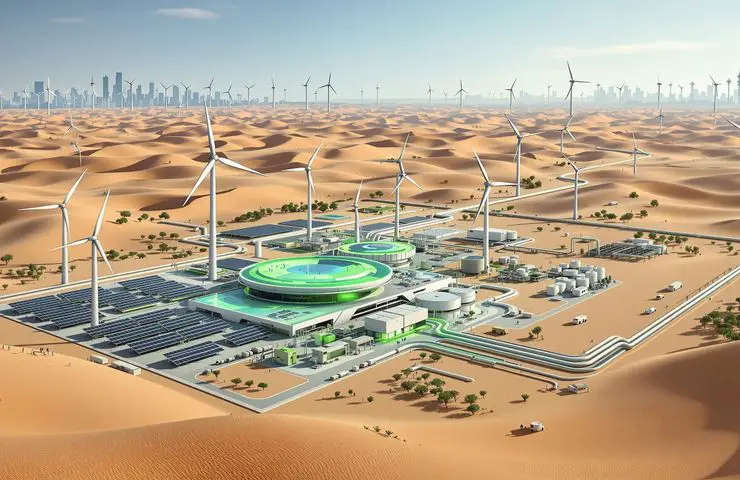
The project centers around the Yanbu Green Hydrogen Hub, located on Saudi Arabia’s western coast. Once operational in 2030, this facility will integrate large-scale renewable energy production, advanced electrolysis systems, and technologies for converting hydrogen into clean ammonia, which simplifies transportation. Supported by EnBW and the Saudi Ministry of Energy, the Yanbu Hub aims to become one of the most advanced hydrogen production facilities globally.
The timing of this agreement coincides with Europe’s urgent need for alternative energy sources following the geopolitical tensions stemming from Russia’s invasion of Ukraine. European nations are actively seeking to reduce their dependence on Russian energy supplies, and Saudi Arabia’s green hydrogen presents a viable solution. SEFE Energy, formerly known as Gazprom Germania, has repositioned itself as a key contributor to Europe’s energy transition, providing a stable and sustainable energy source for Germany and other EU countries while supporting their climate objectives.
The hydrogen production process utilizes renewable energy from solar and wind sources to perform electrolysis, splitting water into hydrogen and oxygen without emissions. The produced hydrogen will be converted into clean ammonia for cost-effective shipping to Europe, where it will be transformed back into hydrogen for use. Although some energy is lost during this conversion, the overall process remains efficient, especially at large scales.
Additionally, long-distance electricity exports will be facilitated through collaborations with companies such as Siemens Energy, GE Vernova, and Prysmian. This infrastructure will support the efficient transfer of renewable energy across borders.
The economic impact of this project is substantial. ACWA Power anticipates that it will add over $250 billion in energy assets by 2030, significantly influencing Saudi Arabia’s GDP and job creation. The cost of hydrogen production in Saudi Arabia is projected to be around $1.50 per kilogram, considerably lower than the global average of $5 per kilogram. This cost advantage positions Saudi Arabia favorably in the competitive landscape of sustainable energy.
This initiative is not isolated; ACWA Power is also collaborating with major international companies such as TotalEnergies Renewables, Edison S.p.A., and Zhero Europe to establish a broader electricity export corridor linking the Gulf with Europe. This effort aims to create an interconnected international energy market powered by high-efficiency technologies and coordinated policies.
Looking ahead, Saudi Arabia is poised to strengthen its leadership role in the green hydrogen sector. With ongoing renewable energy projects and ambitious undertakings like Neom’s Helios, the Kingdom is set to meet the soaring global demand for clean energy while reinforcing its economic growth. The future of Europe’s hydrogen supply may very well depend on the abundant resources and innovative technology of Saudi Arabia.