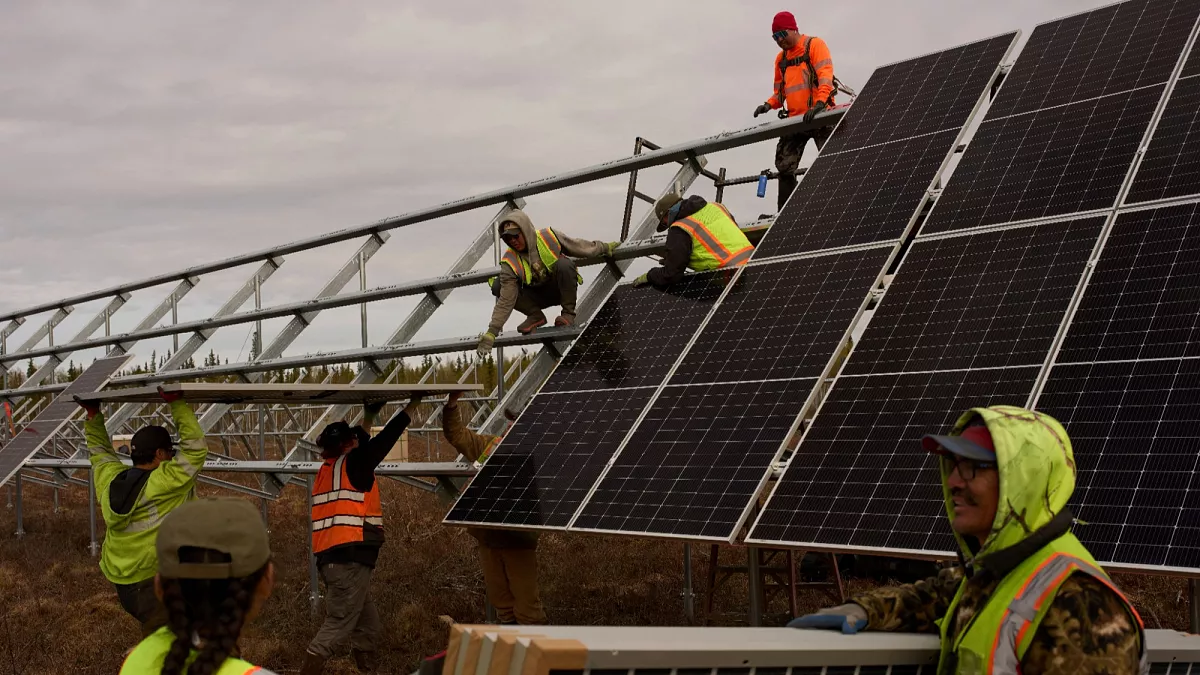
According to two recent United Nations reports, the global transition to renewable energy has reached a critical point. The data indicates that over 90% of new renewable energy capacity is now more affordable than fossil fuel alternatives. In 2024, the world added 582 gigawatts of renewable energy capacity, marking a nearly 20% increase from 2023 and the highest annual growth recorded.
Solar and wind energy are now typically the most cost-effective and rapid solutions for new energy generation. In fact, solar energy has become 41% cheaper than fossil fuels, a dramatic decrease from its previous cost, which was four times higher. Offshore wind energy has also seen a significant price reduction, now being 53% less expensive than fossil fuels.
The UN’s multi-agency report, titled „Seizing the Moment of Opportunity,” highlights that nearly three-quarters of the global increase in electricity generation came from wind, solar, and other renewable sources. UN Secretary-General Antonio Guterres emphasized the progress made since the Paris Agreement, stating that fossil fuels are on the decline while clean energy is on the rise.
Investment in clean energy reached around $2 trillion in the previous year, surpassing fossil fuel investments by $800 billion and reflecting a growth of over 70% in the past decade. Additionally, the International Renewable Energy Agency (IRENA) corroborated these findings, revealing that more than 90% of new renewable energy sources produced electricity at lower costs than the cheapest fossil fuel options.
Despite these advancements, Guterres warned of potential challenges that could hinder this momentum. He pointed to rising geopolitical tensions, trade tariffs, and supply chain issues as factors that could lead to increased costs. IRENA’s Director-General, Francesco La Camera, echoed this sentiment, stressing the need for international cooperation and stable policies to ensure the continuity of renewable energy growth.
In Europe, structural issues such as delays in project permits and limited grid capacity may result in persistent higher costs for renewable energy. Guterres pointed out that fossil fuels still receive nearly nine times the subsidies compared to renewable sources, arguing that reliance on fossil fuels undermines economic stability.
Looking ahead, the reports suggest that while the transition to renewables is irreversible, its speed and equity will depend on today’s decisions. The clean energy sectors contributed to 10% of global GDP growth in 2023 and nearly one-third of growth in Europe, indicating a robust shift toward sustainable energy solutions.